Custom internal platform development.
Spreadsheets, inboxes and disconnected systems leave your team doing the joining-up. Build a platform around the way your business actually operates.
Discuss your platform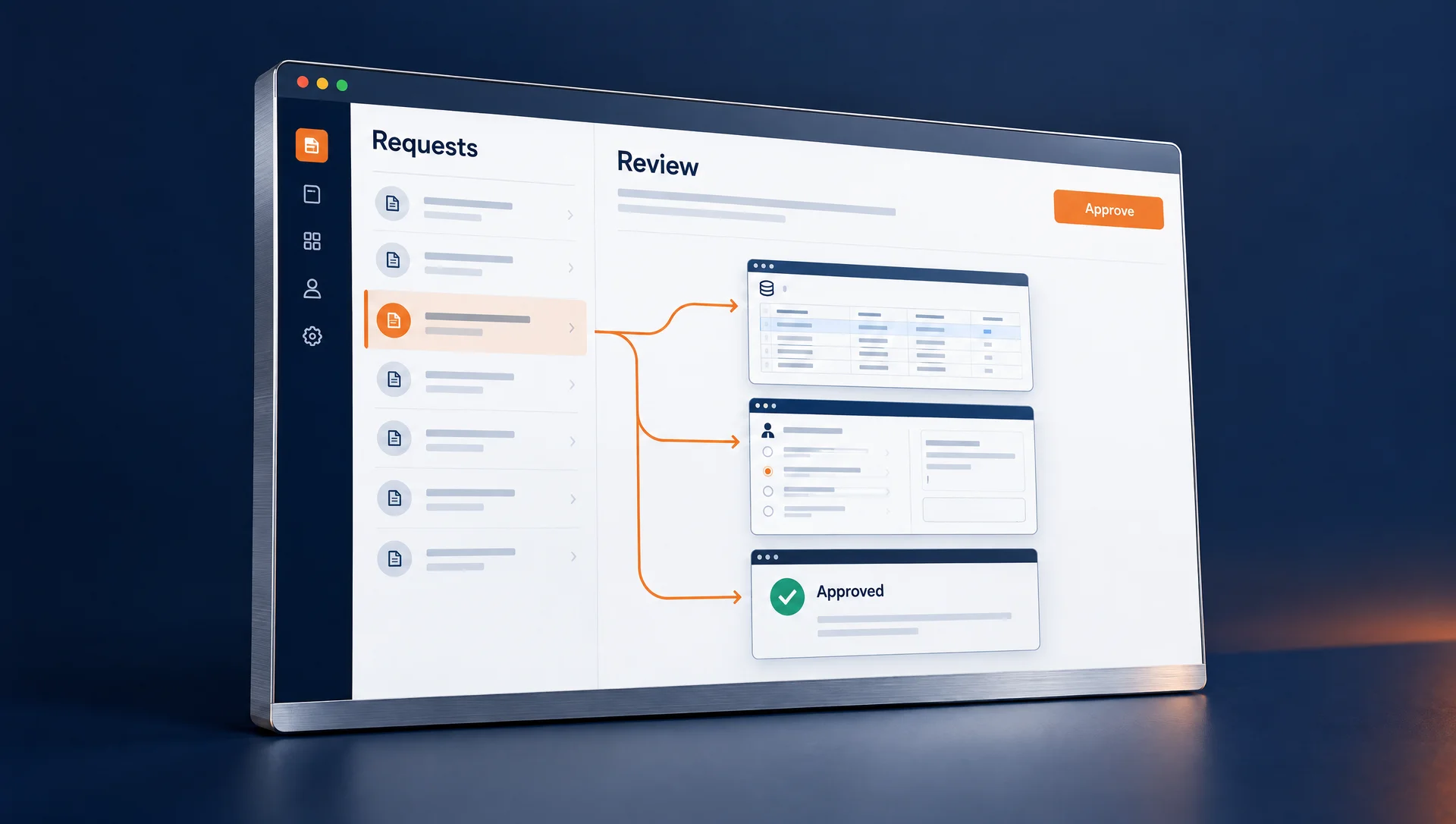
The work between the screens.
Requests, decisions and handoffs belong in one connected workflow. The interface is how your team sees it; the platform is what keeps it moving.
Concept illustrationExplore the approachToo much work happens between your tools.
A good fit when your processes have outgrown the tools you started with, or important work depends on people moving information manually.
What goes into the platform.
A workspace for the real process
Design the request, the review and the next action as one journey. Give operators the detail they need and managers the oversight their role requires.
Roles, permissions and records
Decide who can view, change, approve or export information. Make ownership and the history of important actions part of the application model.
Connections to existing systems
Map the source of truth for each record. Use APIs and events to connect tools without introducing another place where information quietly goes out of date.
Exceptions people can handle
A rejected request, missing document or unavailable integration needs a clear next step. Build the operational paths alongside the happy path.
Make the move without stopping the business.
An internal platform changes more than where people click. It changes how a team keeps track of work. Existing spreadsheets may hold years of useful history, and the people using them often know exceptions that never made it into a process document. We bring that knowledge into the design before deciding what to replace.
The transition needs its own plan: which records to migrate, what to clean up, what can stay in the existing system and how the team will check the new workflow. Starting with a defined group or process makes it possible to learn from everyday use before extending the platform across the business.
Plan for adoption as well as delivery: clear responsibilities, useful records and a practical way for the team to get started.
CCP.
Our own Content Creation Platform connects editorial work, publishing and measurement. We use it inside TIN as well as developing it as a product.
Explore the projectScope the right first release.
We start with the people, tasks and systems involved. Together, we identify the smallest useful platform, the data it needs and the rules it must respect.
The brief should cover who owns the platform, how the team will use it and how it will change as the business grows.
A platform shaped around the work.
- Operational tools and dashboards
- Role-based portals and workflows
- Connections to existing systems
- Content and knowledge operations
Before we build.
Do we need to replace all our existing software?
Usually the first question is what should stay. A custom platform can connect existing systems and add the workflow they do not provide. We identify which system owns each piece of information before deciding what to build.
What should a first release include?
One complete operational journey, with the roles, data and exception handling needed to use it. A narrow but usable release gives the team a better basis for deciding what comes next.
Explore the other solutions.
A platform often combines internal operations, customer journeys and AI.
What does your business need to do next?
Tell us about the people, the problem and the systems involved. We’ll start there.
Discuss your platform