
Begin with the visitor’s task
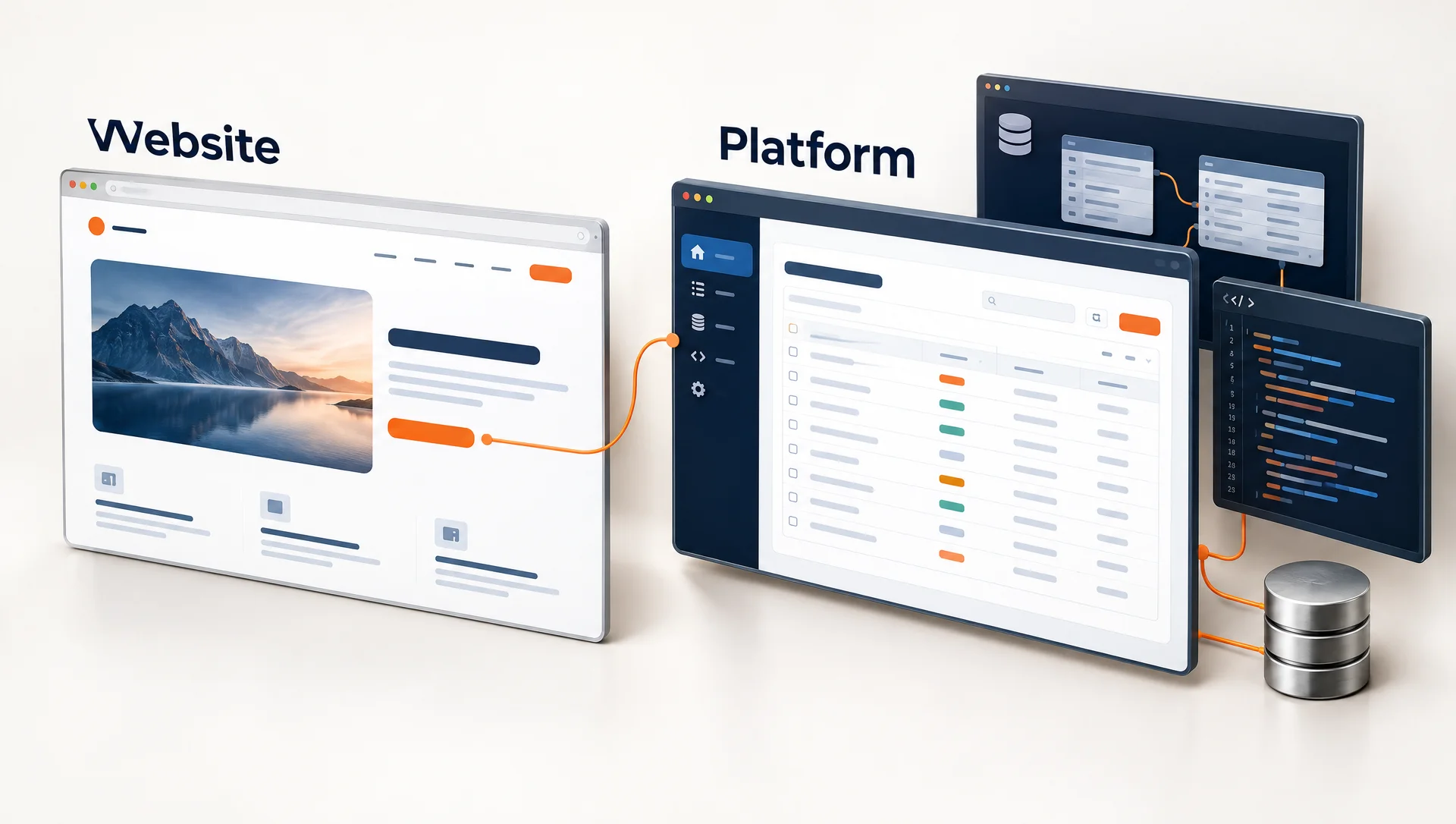
A website can explain an offer, show products, publish events and help people make contact. A platform often goes further: it gives people an ongoing place to work, manage something or use a service. There is no rigid boundary, and many projects combine both. The useful question is what your audience needs to accomplish.
Look behind the screen
An apparently simple customer journey can involve account access, information from other tools and operational work for your team. Conversely, a complex-looking website may mainly need well-organized content and an easy editing experience. Map the work behind the interface before choosing how to build it.
Let the content shape the website
For a hospitality business, events, menus and booking information may be central. For a specialist technical business, visitors may need product explanations, documentation and project records. Both need a clear experience, but their content structures should be different.
Let the service shape the platform
If people need to return to manage an account, collaborate, access information or complete a repeated workflow, consider the platform as an ongoing service. Who runs it? Who can change the information? What happens when a user needs help? Those questions belong alongside the initial design.
Keep the two connected
A public website can introduce a service and guide people into a platform. The platform then needs to deliver on what the website promises. Designing that handoff together helps keep the experience understandable from first visit to everyday use.
See the work behind the thinking.
The PetStore Direct platforms show how customer conversations connect to existing commerce and support systems.
Explore the two PetStore platforms